
How Much Have Public Charging Stations in Thailand Grown in 2026, and How Should You Plan Your Trips?
An update on the number of public charging stations and points in Thailand based on EVAT data, with tips for planning your charging on long trips with confidence

As the number of EVs on Thai roads rises rapidly, a question many buyers care about is how well the public charging network can cope, especially for travel between provinces. Data published in 2026 gives a picture of both the progress made and the limitations to be prepared for.
The Latest Charging Network Figures
According to Electric Vehicle Association of Thailand (EVAT) data as of April 2026, cited by The Nation, Thailand has 4,817 public charging stations with a total of 14,486 charging points, comprising
- 9,049 DC fast-charging points
- 5,437 AC charging points
The higher share of DC charging points over AC shows that operators are focusing on fast charging at rest stops, petrol stations and shopping malls, meeting the needs of intercity travelers who want to recharge quickly.
Challenges Still to Watch
ttb analytics estimates that at the end of 2025, Thailand had around 23 battery EVs per charging point, while the International Energy Agency (IEA) recommends a suitable level of around 10–15. Over the past three years, the number of charging points has grown by around 20% per year, slower than the roughly 25% annual growth in registrations. In addition, almost half of all charging points are concentrated in Bangkok and its vicinity, so drivers in the provinces or those traveling long distances should plan ahead more than city drivers.
Planning Your Charging on the Road
- Use the operator's app to check charger locations, availability and power before setting off, and sign up with several networks
- Allow a range buffer Plan to reach the next charging point with a reasonable amount of battery left; avoid letting it run nearly empty
- Charge to the right level DC fast charging is usually fastest in the mid-range of battery charge; charging all the way to full usually takes much longer
- Choose your timing Avoid busy locations during long holiday weekends, or have a backup charging point ready
Etiquette and Safety at Charging Stations
As the number of EV users grows, sharing charging stations courteously makes things easier for everyone: move your car out of the charging bay as soon as it reaches the level you need, don't park in a charging bay without charging, check the plug and cable before every use, and report faulty equipment to the operator via its app. You should also always keep the portable charging cable supplied with the car on board in case you need it.
Home Charging Remains the Foundation
Although the public network continues to expand, charging at home or at work remains the most convenient and economical option for everyday use, so public charging stations are best seen as a supplement for long trips. Drivers in Ayutthaya, which sits on the main routes to the North and Northeast, can plan their journeys easily if they prepare information in advance.
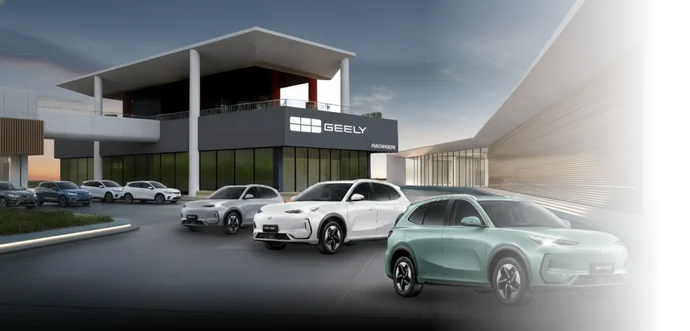
If you are considering a new EV, the Motor Creation team is ready to give impartial advice, from choosing the right model for your needs and planning your charging to after-sales service. You are also welcome to test drive EVs from Deepal, Geely, Riddara and Farizon at our showrooms in the Ayutthaya area.
Sources: The Nation (EVAT data), Thai PBS (ttb analytics) · Compiled by the Motor Creation team
Online channels
Choose a platform, then the channel you'd like to follow