
EV 3.5 Scheme in 2026: How Much Is the Subsidy, and How Do Buyers Benefit?
Understanding years three and four of the EV 3.5 scheme, including battery-size-based subsidies, the excise tax reduction and the local production offset requirements that shape the market

EV 3.5 is the government's EV promotion package, building on EV 3.0 and running for four years from 2024 to 2027. 2026 is the scheme's third year, in which subsidy rates are reduced according to steps set out from the start. Anyone planning to buy an EV should therefore understand how the scheme is structured in order to time their purchase well.
Subsidies by battery size and year of sale
According to details announced by the National EV Policy Committee and reported by Krungthep Turakij, electric passenger cars priced up to THB 2 million receive subsidies that vary by battery capacity, as follows
- Batteries of 50 kWh or more THB 100,000 per car in year one, THB 75,000 in year two and THB 50,000 in years three and four
- Batteries under 50 kWh THB 50,000 per car in year one, THB 35,000 in year two and THB 25,000 in years three and four
- Electric pickups Priced up to THB 2 million with a battery of at least 50 kWh: THB 100,000 per vehicle throughout the four years, for locally produced vehicles only
- Electric motorcycles Priced up to THB 150,000 with a battery of at least 3 kWh: THB 10,000 per vehicle, for locally produced vehicles only
As a result, in 2026 and 2027, EVs participating in the scheme receive the same subsidy rate, which manufacturers generally already reflect in their selling prices.
Tax benefits that remain
Beyond direct subsidies, the scheme also cuts excise tax on EVs from 8% to 2% for cars priced up to THB 7 million. The import duty reduction of up to 40% for fully imported cars applied only in the first two years, 2024–2025. As a result, EVs sold in Thailand today have a noticeably higher share of local production.
Production offset requirements and their impact on the market
Manufacturers participating in the scheme must produce vehicles locally to offset imports, at a ratio of 2 vehicles produced for every 1 imported in 2026, rising to 3 to 1 in 2027. This requirement has led many brands to invest in factories or contract manufacturing in Thailand, and ttb analytics expects domestic battery EV production this year to rise to around 100,000 units, from 70,000 the year before. For buyers, this means better parts availability and after-sales service over the long term.
Advice before you decide
Detailed conditions of the scheme, such as sales and registration deadlines, may be revised by government agencies. Buyers should therefore ask their dealer whether the model they are interested in is covered by the scheme and which benefits are already included in the quoted price, and compare battery capacity with their real-world range needs, since cars with batteries of 50 kWh or more not only qualify for higher benefits but usually offer longer range per charge.
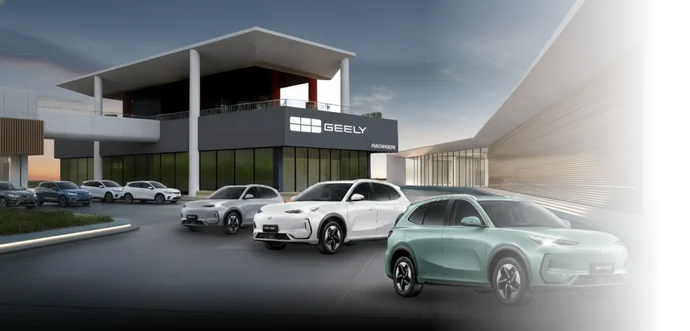
If you are considering a new EV, the Motor Creation team is ready to give impartial advice, from choosing the right model for your needs and planning your charging to after-sales service. You are also welcome to test drive EVs from Deepal, Geely, Riddara and Farizon at our showrooms in the Ayutthaya area.
Sources: Krungthep Turakij, Thai PBS · Compiled by the Motor Creation team
Online channels
Choose a platform, then the channel you'd like to follow